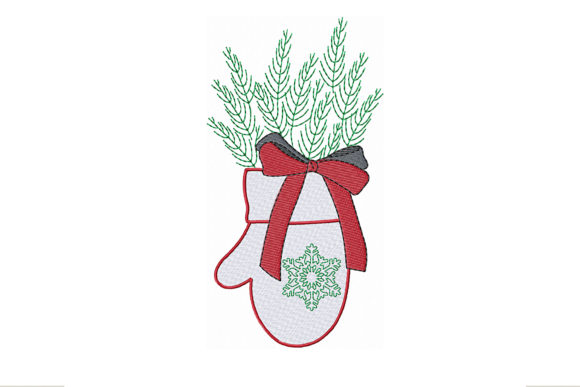
Review: Christmas Mitten with Pine Branches Design
As an embroidery designer who has spent countless weekends standing behind booth tables, I have learned that not every pretty design translates into a bestseller. When I first loaded the Christmas Mitten with Pine Branches machine embroidery design onto my hoop, my immediate reaction was one of quiet confidence. This is not a loud, chaotic graphic screaming for attention. Instead, it offers a refined, rustic elegance that fits perfectly into the current trend of cozy, farmhouse-inspired holiday decor. For craft fair sellers and handmade shop owners, this distinction is vital. You need designs that stop traffic without overwhelming the viewer, and this motif achieves that balance beautifully.
First Impressions and Aesthetic Appeal
The visual language of this design speaks to warmth and tradition. The combination of a classic mitten silhouette with organic pine branches creates a narrative of winter comfort. It feels less like a cartoonish holiday clipart and more like a premium textile illustration. When evaluating a craft fair product, I always ask myself: does this look expensive? Does it look like something mass-produced, or does it carry the mark of a skilled artisan? The clean lines and natural subject matter of the Christmas Mitten with Pine Branches lean heavily toward the latter. It suggests a high-quality handmade product that customers will be proud to display in their homes.
This aesthetic versatility is its strongest asset. It is not strictly traditional red and green; it works equally well in muted tones for a modern Scandi vibe or rich jewel tones for a classic look. For Etsy sellers and boutique makers, this flexibility means you can create multiple colorways from a single digital embroidery file, maximizing your return on investment.
Strategic Product Placement for Maximum Sales
While the product description notes that the design is perfect for home decor, specifically pillows and textile bags, my experience suggests expanding this view. Let us break down where this design truly shines in a real-world market setting.
- Tote Bags and Market Bags: A large-scale version of this design centered on a canvas tote is a winner. Shoppers love functional items that double as seasonal statements. The tote bag design potential here is high because the mitten shape provides a clear focal point that is easily recognizable from a distance.
- Kitchen Textiles: Do not limit yourself to pillows. This design is exceptional for tea towel embroidery and aprons. An embroidered hem on a linen tea towel featuring this motif adds a touch of luxury that justifies a higher price point. For apron embroidery, placing the design on the bib or pocket creates a charming, giftable item for the hostess who has everything.
- Small Accessories: Consider scaling it down for embroidered patch applications or small fabric pouches. These make excellent impulse buys at the checkout counter of your booth.
However, caution is required when applying this to curved surfaces like caps. While possible, the pine branch details may distort if the hoop size is too small or if the cap material is too thick. Always prioritize flat or semi-flat surfaces for the crispest result.
Production Practicality and Batch Efficiency
For those of us running a small shop product line, time is money. One of the key advantages of the Christmas Mitten with Pine Branches is its likely efficiency. Although I do not have the exact stitch count, the visual simplicity suggests a manageable run time. This makes it ideal for batch production. You can hoop multiple items, let the machine run, and finish several units in an afternoon. This repeatability is crucial for stocking up before the holiday rush.
When preparing your commercial embroidery workflow, consider the stitch density. Pine branches can sometimes involve dense satin stitches or complex fill patterns. If the density is too high, it may cause puckering on lightweight fabrics like cotton tea towels. Conversely, if it is too light, it may not cover dark fabrics adequately. This is why testing is non-negotiable.
Technical Considerations and Careful-Use Notes
Before you list this as a finished product or include it in your design assets library, there are technical hurdles to clear. As an experienced designer, I advise the following steps:
- Fabric Texture Matters: Textured towels can swallow small details. Ensure the pine needles have enough definition to stand out against the weave of the fabric. If the details are too fine, they may get lost on terry cloth.
- Thread Contrast: Test your thread colors rigorously. A green-on-green approach can look sophisticated but risks poor visibility. Ensure there is enough contrast between the mitten, the branches, and the background fabric.
- Stabilizer Selection: Use the right stabilizer for your fabric weight. A cut-away stabilizer is often safer for items that will be washed frequently, like aprons and towels, to prevent distortion over time.
- Mockup Creation: Create at least one real printable mockup or photograph a physical sample. Digital renderings often look cleaner than reality. Seeing how the threads lay on actual fabric helps you judge if the design needs tweaking.
Additionally, check the licensing terms included with your embroidery file. While many designers allow commercial use for finished physical goods, restrictions may apply to digital resale. Confirm these details to protect your business.
Enhancing Brand Consistency and Buyer Engagement
Ultimately, the Christmas Mitten with Pine Branches is more than just a pattern; it is a tool for building your brand. Using consistent, high-quality motifs across your product line creates a cohesive look that buyers remember. When a customer sees this design on a pillow, then on a tote, and then on a towel, they recognize your signature style. This recognition drives buyer engagement and fosters loyalty.
In a crowded craft fair environment, clarity sells. This design is easy to understand at a glance. It communicates "holiday" and "quality" instantly. Whether you are an Etsy seller optimizing your keywords or a booth owner arranging your display, leverage this clarity. Use the design on items that allow it to breathe. Do not clutter it with excessive embellishments. Let the embroidery speak for itself.
In conclusion, this design is a strong contender for your holiday collection. It balances aesthetic appeal with production practicality. By paying attention to fabric choice, stabilizer support, and strategic product placement, you can turn this single machine embroidery design into a profitable segment of your holiday inventory. Test it, tweak it, and watch it become a staple in your seasonal offerings.